
Did you know that surfing harnesses not just skill, but also core strength and flexibility? Whether you’re a seasoned wave rider or a curious beginner, having the right physical foundation is crucial for paddling out, catching waves, and maintaining balance. Focusing on targeted exercises can transform your surfing experience, reducing the risk of injury and enhancing your overall performance. Imagine gliding effortlessly across the water, feeling the ocean’s rhythm match your own-this isn’t just a dream; it can be your reality! In this guide, we’re diving into the best exercises that elevate strength and flexibility, ensuring you’re not just ready to surf but ready to thrive. Let’s explore these dynamic workouts that will help unlock your potential and keep you in tune with the waves. Surf’s up, and your best ride is just a workout away!
Best Strength Exercises for Surfers to Boost Performance
The roaring waves are calling, and beneath that salty mist, an aspect of surfing looms large: strength. It’s not just about balancing on your board; it’s about harnessing your entire body to paddle out, catch the perfect wave, and ride it with power. For surfers, incorporating specific strength exercises isn’t merely beneficial-it’s essential. Whether you’re a grom looking to improve or a seasoned surfer seeking those elusive barrel rides, the right strength training can enhance your performance and stamina in ways that help translate your effort into ocean mastery.
A stellar surfing performance begins with the right foundation, and that foundation is built through targeted strength training. Here are some of the best strength exercises surfers should focus on for enhanced performance:
Top Strength Exercises for Surfers
- Push-Ups: A classic that builds upper body strength crucial for powerful paddling. You can jazz them up by trying diamond push-ups or uneven variations to hit different muscle groups.
- Pull-Ups: These are your paddle powerhouses. Getting stronger in pull-ups translates directly to getting better at paddling out against currents and catching waves.
- Deadlifts: This exercise activates multiple muscle groups, especially in your legs and core, which are vital for maintaining stability while riding the wave.
- Squats (with variations): Standard squats, jump squats, or single-leg squats enhance leg strength, crucial for powerful take-offs and smooth landings.
- Plank Variations: Hold your ground (or board!). Side planks and plank ups engage your core, keeping you stable and balanced during quick maneuvers.
Integrating these exercises into your routine not only builds strength but also enhances your agility and endurance. However, be mindful to select the routine that aligns with your current fitness level and gradually escalate the intensity. A well-rounded approach will not only prepare you for the waves but also help you recover and prevent injuries down the line.
Think of these workouts not just as exercises but as tools in your surf quiver. Like an excellent board that fits your style, the right strength training will enhance your ability to shred the waves with confidence. Embrace the journey, experiment with your workouts, and remember, every drop into the ocean feels better when you know you’ve trained your body with purpose. So grab your gear and let the ocean be your playground, where strength meets the surf!
Essential Flexibility Routines for Enhanced Surfing Mobility
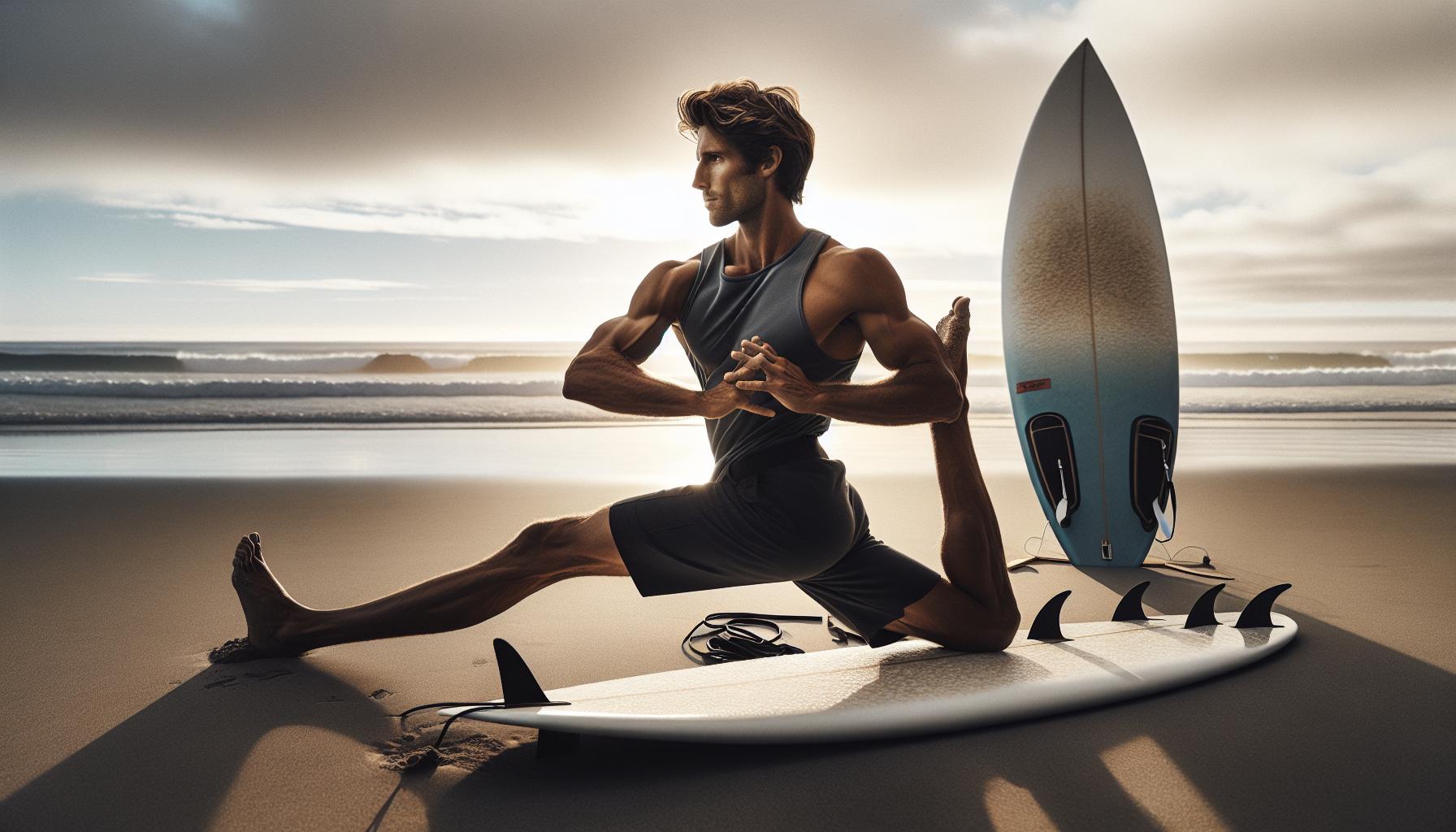
As you paddle out, the sun drapes its warm rays across your back, and you feel the ocean’s rhythm whispering through the waves. But to truly connect with the water and catch the ride of your dreams, maintaining flexibility becomes just as vital as building strength. With each twist and turn of your body as you navigate those exhilarating waves, flexibility allows for smoother movements and sharper maneuvers. Imagine gliding effortlessly, executing that perfect bottom turn or sudden pop-up without feeling stiff or hindered. It’s your ticket to a more fluid surfing experience.
To enhance your surfing mobility, incorporating specific flexibility routines into your training is key. Think of these exercises as your warm-up before the exhilarating ride-the essential prep that keeps your body limber and resilient. Here are a few fundamental movements that every surfer should include in their flexibility routine:
Essential Flexibility Moves
- Hip Openers: Seated straddles or figure-four stretches help loosen up tight hip flexors, allowing for more dynamic foot placement on the board.
- Torso Twists: While seated, a simple twist to each side can greatly enhance your rotational mobility, which is crucial for generating power during re-entries.
- Shoulder Stretches: Paddling requires a lot from your shoulders, so incorporating chin pulls or arm crossovers can help relieve tension and improve your reach.
- Hamstring and Calf Stretches: Keeping your legs limber through standing toe touches or downward dog variations prepares you for explosive movements like popping onto the board.
- Dynamic Leg Swings: As you stand on the beach, swinging your leg back and forth or side to side can increase blood flow and flexibility in your hips and hamstrings, priming your body for action.
Integrating these flexibility routines into your regular training will not only improve your surfing performance, but they’ll also help prevent injuries that can arise from tight muscles and joints. Picture yourself riding a wave, your body fluid and responsive to every shift in balance. With the right mobility work, you’ll find yourself transitioning seamlessly between maneuvers, making each ride feel more natural and enjoyable.
Remember, flexibility is a journey. Just like the ebb and flow of the tides, your body’s adaptability will grow with consistent practice. You don’t need to be a yogi; simply dedicate a few minutes before and after your surf sessions to these stretches. Feel the ocean calling as you ease into your movements, and embrace the freedom that comes from being a flexible surfer. After all, the ocean is where you find your flow, and maintaining that flow requires a body that moves as freely as the waves themselves.
Core Strength: The Key to Surfing Stability

Imagine catching the perfect wave, the rush of adrenaline coursing through you, but just as you start to feel that blissful glide, you lose your balance and tumble into the frothy sea. The truth is, core strength is the unsung hero of your surfing journey, anchoring your movements and providing the stability needed to ride those waves with confidence and finesse. Your core is more than just your abs; it’s a powerful ensemble of muscles that work together to stabilize your body, connect your upper and lower halves, and enhance your overall performance on the board.
To build a resilient core that can withstand the demands of surfing, consider integrating functional exercises into your routine. These movements mimic the dynamic nature of surfing, engaging multiple muscle groups while improving your balance and stability. Here are a few essential exercises to include:
Powerful Core Exercises
- Planks: Classic yet effective, planks help strengthen your entire core. Try variations like side planks or plank rotations to challenge yourself further and engage different muscles.
- Russian Twists: Sit on the ground with your knees bent and lean back slightly. Twist your torso side to side, optionally holding a weight or a surfing paddle to increase resistance and mimic paddling movements.
- Bicycle Crunches: Lie on your back and lift your legs in a tabletop position. Alternate bringing your elbow to the opposite knee while extending the other leg, engaging your obliques just like you would during a critical maneuver on your board.
- Dead Bugs: Lie on your back with your arms extended towards the ceiling and your legs in a tabletop position. Slowly lower one arm and the opposite leg towards the ground while keeping your lower back pressed into the floor. This exercise promotes coordination and stability, which are vital in surfing.
Incorporating these exercises into your fitness regimen not only builds strength but also enhances your body awareness, making it easier to read the waves and respond to their nuances. Think about it: when your core is strong, you can focus on the joy of surfing-twisting, turning, and paddling without the fear of losing your balance or getting thrown off your board.
Moreover, it’s essential to remember that core strength is a holistic practice. It’s not just about pumping iron or doing endless sit-ups; it’s about cultivating a deep connection with your body and its movements. As you strengthen your core, visualize yourself as a sturdy surfboard gliding over the waves, seamlessly adapting to each swell. With consistency and dedication to core training, you will undoubtedly experience newfound control and stability that elevates your surfing experience to exhilarating heights.
Upper Body Workouts for Powerful Paddling

When the swell rolls in and the surf beckons, strong paddling isn’t just a skill; it’s an art form. The smooth, fluid movements that propel you through the water to catch that perfect wave require a powerhouse of upper body strength and endurance. Just imagine the feeling of gliding over the shimmering ocean, the wind in your hair, and your board cutting cleanly through the surf. To experience this euphoria, cultivating robust shoulder, back, and arm muscles is essential. Let’s dive into a few exhilarating workouts that will transform you into a paddling powerhouse.
Even the most experienced surfers know that the key to effective paddling lies in the shoulders. Strong shoulders not only enhance your overall power but also prevent fatigue as you battle against the breaking waves. Consider incorporating the following exercises into your routine to build that paddling strength:
Essential Upper Body Exercises
- Push-Ups: A classic! They engage your chest, shoulders, and triceps, mimicking the pushing motion you use to paddle. Try variations like explosive push-ups to add excitement and build additional power.
- Pull-Ups: Nothing says functional strength quite like pull-ups. They focus on the back and biceps, crucial for pulling your body over the water as you paddle. Can’t do a pull-up? Try assisted versions or negative pull-ups to build your strength gradually.
- Resistance Band Rows: Using a resistance band provides a fantastic way to simulate the pull of your arms as you paddle. Secure the band to a stationary object, hold the ends, and pull back, focusing on squeezing your shoulder blades together.
- Medicine Ball Slams: While it might sound intense, this exercise packs a punch for developing upper body power and coordination. Lift the medicine ball above your head and slam it down to the ground aggressively, engaging your core and arms with each rep.
As you incorporate these workouts, envision the vibrant scenes of the ocean all around you-pelicans diving into the surf, the rhythmic sound of waves crashing against the shore, and the salty breeze whipping past your face. Each exercise connects you more deeply to the essence of surfing, fueling your desire to conquer the next wave. Remember, it’s not just about raw strength; technique plays a crucial role too. Focus on fluid, controlled movements, and soon you’ll notice how your paddling transforms from a chore into a captivating flow, allowing you to ride the tide with grace and power.
Above all, staying consistent is key. Much like waiting for the perfect wave, training your upper body requires patience and dedication. Mix in these exercises with your core routines, maintain a balanced diet, and you’ll set yourself up for success in the water. As you sharpen your paddling prowess, look forward to the thrilling moments when all your training translates into catching that wave and experiencing the sheer joy of riding the ocean’s rhythm.
Leg Day: Building Strong Surfer Legs
As you paddle out, the waves reflecting the blues of the sky, you realize that having strong legs is not just about looking good in board shorts; it’s about powering through each wave with confidence and control. Your legs are the unsung heroes of your surfing journey. They anchor you when you catch that killer wave and spring into action when you need to adjust your balance. Building strong surfer legs is essential for enhancing your performance, preventing injuries, and ultimately making your surfing experience much more exhilarating.
To lay the groundwork for those powerful legs, incorporate a combination of strength and flexibility exercises that target the key muscle groups involved in surfing. Here are some essential workouts to incorporate into your leg day routine:
Must-Try Leg Exercises
- Squats: A foundational exercise that strengthens your quadriceps, hamstrings, and glutes. Try different variations like jump squats for a burst of explosive power or single-leg squats to improve balance.
- Lunges: These mimic the movements needed to maneuver on your board. Opt for front, reverse, or lateral lunges to develop stability and control in various directions.
- Deadlifts: This exercise targets the posterior chain, crucial for pulling yourself up on the board after a wipeout. Maintain proper form to ensure you activate those hamstrings effectively.
- Box Jumps: Elevate your heart rate and develop explosive leg strength with box jumps. This will not only boost your fitness but also enhance your ability to pop up swiftly when catching waves.
But let’s not forget flexibility! A flexible surfer is a successful surfer. As you build strength through your leg workouts, marry it with stretching routines that focus on the hips, hamstrings, and calves. After your strength training, spend time on dynamic stretches like leg swings, or use static stretches such as the seated forward fold to keep those muscles supple and ready for action.
In beach culture, leg strength translates to endurance on the board. So, each rep and stretch you complete replicates the feeling of gliding over the water. Imagine the joy of riding a wave, feeling every surge as your legs respond instinctively, allowing you to carve left and right with style. Embrace the spirit of surfing by treating leg day as a crucial part of your training and a path to enhanced agility and control in the waves. With your strong legs beneath you, the ocean’s rhythm becomes your dancefloor, and every wave is a new adventure waiting to be conquered.
Balance Training to Master Your Surf Board
As you glide across the surfing waves, it’s not just your arms and legs that come into play; balance is the unsung hero of your oceanic adventures. That exhilarating moment when you pop up on the board and find your groove hinges on how well you can maintain that center of gravity amidst the shifting tides. When you’re out there battling the waves, a finely-tuned sense of balance allows you to read the ocean’s mood, adjust your stance, and execute sharp turns effortlessly.
To master the art of balance, integrating specific training routines into your fitness arsenal is key. Think of your surfboard as an extension of yourself-the more in tune you are with your body’s movements, the better you can navigate the water. Begin by incorporating balance-focused exercises into your workout, such as single-leg stands or balance board drills. These drills engage your core while strengthening your stabilizing muscles, crucial for keeping your footing stable when riding those gnarly waves. Invest in a balance board or simply use a pillow at home for practice; it’s like your personal, portable beach!
Another exciting way to enhance your balance is through surfing-specific yoga practices that connect body and mind. Poses like the tree pose and warrior III not only improve core stability but also foster that mental calmness essential for making split-second decisions while on the water. This connection between strength, focus, and flexibility creates a robust foundation that will translate directly to your time spent on the waves.
Finally, it’s essential to keep the fun in your balance training. Try challenging yourself with games that require shifting weight, like using a slackline at the beach or even playing frisbee with friends while standing on one leg. The goal is to mesh your training with the joyful, spontaneous nature of surf culture, so you not only hone your skills but also create memorable moments that keep you stoked for the next session! Embrace every ride, every wipeout, and every laugh as you master your balance and become one with the ocean.
Breath Control Techniques for Surfer Endurance
The ocean can be a demanding partner, often pushing you to your limits as you navigate its powerful waves. Imagine catching a wave, the pulse of the surf beneath you, while your lungs are on fire from pulling yourself through the water. Breath control isn’t just a nicety-it’s essential for mastering endurance and maximizing your surfing experience. By learning to harness the power of your breath, you’ll dive deeper into a world of enhanced performance, allowing you to stay calm and composed amidst the chaos of the sea.
To start your journey toward improved breath control, consider practicing diaphragmatic breathing. This technique, also known as belly breathing, focuses on engaging your diaphragm fully. Here’s how to do it: sit or lie down comfortably and place one hand on your chest and the other on your belly. Inhale deeply through your nose, allowing your belly to rise while keeping your chest relatively still. Exhale slowly through your mouth and feel your belly fall. Aim for several minutes of practice each day, slowly increasing your duration. This method not only boosts your lung capacity but fuels your body with much-needed oxygen during intense paddle sessions.
In addition to diaphragmatic breathing, incorporating breath holds can significantly enhance your surf endurance. This technique helps your body learn to tolerate higher levels of carbon dioxide, which can be useful for extended periods underwater or when you’re catching multiple waves in quick succession. Start with simple holds: inhale deeply, hold your breath for 3-5 seconds, and then exhale. Gradually increase the duration as you grow more comfortable. You might even practice this while waiting for your next wave, transforming downtime into a powerful training opportunity.
H3: Practice Mindfulness on the Water
Another exciting way to blend breath control with surfing is through mindfulness practices. As the surf crashes and the sun dips below the horizon, use your surroundings to guide your breathing. Sync your breath with the rhythm of the waves-inhale as the wave approaches and exhale as it recedes. This connection not only calms your mind but helps build awareness of your body’s movements, enhancing your overall performance. By making breath control an integral part of your surfing adventures, you’ll ride the waves with a newfound grace and endurance that even the ocean will admire!
Recovery Strategies: Preventing Injuries and Enhancing Mobility
After a thrilling session of carving through waves, you might feel the adrenaline coursing through your veins, but don’t let the surge of excitement drown out the importance of recovery. Just as the tides ebb and flow, so too must your approach to surfing include moments of healing and rejuvenation. The key to maximizing your time in the water lies not just in the technique you wield on your board but also in how well your body recovers between those exhilarating rides.
To kickstart your recovery, embrace a holistic approach that includes hydration, proper nutrition, and restorative practices. Your muscles have just faced a unique challenge, and they need the right fuel to rebuild. Focus on incorporating whole foods rich in protein and healthy fats into your diet, such as grilled fish or avocado toast, to replenish your energy stores and assist with muscle repair. Don’t forget the power of hydration-the saltwater can be dehydrating, so dive into that post-surf coconut water or a refreshing smoothie packed with electrolytes.
Another essential recovery strategy involves movement-specifically gentle exercises that promote blood flow and mobility without placing undue stress on your body. Incorporating yoga or dynamic stretching routines can greatly enhance your flexibility and help alleviate muscle soreness. Imagine rolling out your mat on the beach, the smell of the ocean mingling with the fresh morning air, as you flow through sun salutations and downward dogs. This not only aids recovery but also keeps you limber for your next surf session.
Focused Recovery Techniques
Consider integrating specific recovery techniques such as foam rolling and massage therapy into your routine. Foam rolling helps release muscle tightness and improve circulation, making it a surfer’s best friend. Aim to target areas that may feel particularly sore, such as your back or thighs. Meanwhile, massage can enhance flexibility and relieve tension-a treat for your body after it has battled the waves. You might even reward yourself with a post-surf deep tissue massage to work out any lingering knots and leave you feeling refreshed and ready for your next adventure.
Lastly, never underestimate the power of rest. Allowing your body time to heal is critical. Set aside days where all you do is chill on the beach, soak up some sun, and let your muscles recover. Your waves will be waiting for you, and with each care-free moment, you’ll build the strength to return stronger and more connected to the surf. Remember, recovery is not a pause in your surf journey; it’s an integral part of it, propelling you toward bigger waves and longer rides. Embrace this vital time off the board, and you’ll find yourself invariably more in tune with the ocean’s rhythm when you paddle out next.
Integrating Surf-Specific Movements into Your Routine
Imagine the sun dipping below the horizon, casting a warm glow over the ocean as you ride your last wave of the day. Each exhilarating moment on your board connects you deeply with the rhythm of the sea, but to carve through those waves with precision and power, you must incorporate surf-specific movements into your training routine. By doing so, not only will you enhance your performance, but you’ll also develop skills that seamlessly translate from dry land to the surf.
To get started, focus on exercises that mimic the dynamic movements of surfing. For instance, the lunge to rotational twist is a fantastic way to build strength while improving your body’s ability to pivot and control your board. Begin in a standing position and step forward into a lunge, keeping your front knee over your ankle. Once you’re in the lunge, twist your torso towards your front leg, engaging your core. This mirrors the body movements you make while paddling and changing directions on your board. Aim for 3 sets of 10 reps on each leg to really build up that functional strength and flexibility.
Another great addition is the paddle to stand-up drill using a stability ball. Start by lying on your stomach on the ball with your hands hovering off the ground, as if you were paddling out. Engage your core and push up into a standing position-this movement mimics the transition from paddling on your board to popping up on a wave. Incorporate this into your strength training 2-3 times a week for a solid boost in strength and balance.
Don’t forget about dynamic stretches and yoga! Incorporating routines like sun salutations not only enhances flexibility but also builds the mental focus needed to stay centered while riding the waves. You’ll want to dedicate time to hold positions that stretch your hamstrings, back, and shoulders, helping to avoid injuries on those big wipeouts. Try to integrate sun salutation sequences into your warm-up before workouts or as part of your cooldown after a physical day at the beach.
Lastly, consider a balance and coordination drill like the single-leg Romanian deadlift. This exercise challenges your stability while strengthening your hamstrings and glutes-critical components for powerful paddle strokes and maintaining your center of gravity on the board. Stand on one leg and slowly lower a weight toward the ground while extending your other leg behind you. Aim for 3 sets of 8-10 reps on each side to ensure both legs are equally strong and capable of supporting you in the surf!
By integrating these dynamic, surf-specific movements into your training, you’ll not only boost your performance but also deepen your connection to the ocean, transforming each session into an adventure that makes you feel alive. Whether you’re a novice eager to catch your first waves or a seasoned pro looking to perfect your technique, these tailored exercises will enhance your surfing journey and keep you stoked for every thrilling ride ahead.
How to Create a Personalized Surf Training Plan
Creating a training plan that resonates with your surfing goals is like crafting the perfect wave-both an art and a science. Imagine the feeling of carving through the water, effortlessly gliding on your board as your body moves in tandem with the rhythm of the ocean. To achieve that fluidity and power, your training must be tailored to not only strengthen your physique but also to enhance your flexibility and balance. Here’s how to construct a personalized surf training regimen that prepares you for every exhilarating session ahead.
Begin by assessing your current fitness level and identifying specific areas you want to improve. Are your paddling muscles up to par? Could your balance use some work? Taking note of your strengths and weaknesses will help hone in on the most impactful exercises. Consider including a balanced mix of strength, flexibility, and endurance workouts. For strength, focus on core and upper body exercises like push-ups, medicine ball twists, and planks. Flexibility routines can include yoga or dynamic stretching to keep those muscles supple and ready for action. Finally, incorporate endurance drills such as swimming or running to build stamina for longer surf sessions.
Sample Training Plan Structure
| Day | Focus | Exercises |
|---|---|---|
| Monday | Strength | Push-ups, Squats, Planks |
| Tuesday | Flexibility | Yoga Session or Dynamic Stretching |
| Wednesday | Endurance | Swimming or Running |
| Thursday | Strength | Medicine Ball Twists, Lunges, Deadlifts |
| Friday | Flexibility | Yoga Session or Pilates |
| Saturday | Balance & Coordination | Single-Leg Deadlifts, Bosu Ball Exercises |
| Sunday | Rest & Recovery | Stretching, Foam Rolling |
Fuel your body with the right nutrition to complement your training regimen. A well-balanced diet, rich in proteins, healthy fats, and carbohydrates, will support muscle growth and recovery. Hydrate frequently, especially before and after your surf sessions, to maintain peak performance.
Lastly, remember that surfing is as much about mindset as it is about physical prowess. Incorporate visualizations or meditative practices that connect you to the ocean’s energy, enhancing both focus and determination. By tailoring a training plan that’s dynamic and reflects your personal goals, you’ll not just ride the waves; you’ll dance with them, transforming each day on the water into an unforgettable adventure. So gear up, embrace the journey, and let every practice session bring you closer to that exhilarating ride!
The Role of Nutrition in Surf Performance
Imagine riding a perfect set wave-your heart racing, muscles engaged, and every movement a seamless expression of freedom. To achieve that exhilarating level of performance, fueling your body with the right nutrients is just as essential as mastering your surf skills. Nutrition plays a pivotal role in surf performance, ensuring you have the energy to paddle out, catch waves, and recover afterwards. A balanced diet can make all the difference, not just in how long you can stay in the water but also in how effectively you can maneuver your board and respond to the unpredictable nature of the ocean.
To maximize your surf sessions, aim for a diet rich in vital macronutrients: carbohydrates, proteins, and healthy fats. Carbohydrates are your primary fuel source, providing the energy needed for those intense paddling sessions and powerful pop-ups. Think of whole grains, fruits, and veggies as your pre-surf meal essentials. Consider loading up on bananas for a quick energy boost or easy-to-digest oatmeal to keep you fueled for hours at a stretch.
Protein is crucial for muscle repair and growth, especially after a day of conquering waves. Incorporating lean proteins like chicken, fish, or tofu can help your body recover from fatigue and strain, so you’ll be ready for your next surf adventure. Don’t forget the healthy fats-avocados, nuts, and seeds not only provide energy but also support joint health and overall endurance.
Hydration: Your Unsung Hero
Never underestimate the power of hydration. While you may think of water as just a refresher, it’s essential for maintaining optimal performance. Dehydration can lead to fatigue, cramping, and decreased focus-definitely not what you want when you’re trying to ride the perfect wave! Before and during your sessions, sip on water and consider adding electrolyte-rich drinks or coconut water to replenish what you sweat out. Proper hydration can significantly enhance your stamina and concentration, making your surf days more enjoyable and effective.
To sum it all up, treat your body like the fine machine it is by investing in quality nutrition. When you harness the right balance of nutrients, you’ll not only improve your performance on the water but also forge a deeper connection to the surf culture, where health and fitness are celebrated as much as catching that next wave. So grab that smoothie, pack your post-surf snacks, and let the ocean be your playground-your body will thank you!
Surf Culture and the Lifelong Journey of Fitness
The vibrant world of surfing is far more than just a sport-it’s a lifestyle that embodies balance, resilience, and a deep connection with nature. As you paddle out beneath a blazing sun, feeling the salt spray on your skin and the rhythm of the waves pulsing in your veins, you realize that each wave caught is a testament to your journey. Every surfer, from the weekend warrior to the seasoned pro, is engaged in a lifelong pursuit of fitness that transcends mere physical prowess. It’s about nurturing the body, cultivating mental endurance, and embracing the ocean’s unpredictable spirit.
Engaging in surfing cultivates not only strength and flexibility but also an appreciation for the intricate dance between body and wave. While your muscles work to navigate the swell, your mind begins to synchronize with the ocean, learning to read its moods and movements. It’s a continuous cycle of improvement, where each session teaches you how to adapt and refine your techniques. This physical adventure fosters a deeper connection to your surroundings, feeling the ocean’s power while harnessing your own. To truly thrive in this environment, developing a consistent fitness routine that incorporates strength training, flexibility exercises, and balance workouts becomes essential-it primes your body for the challenges ahead and enhances your overall performance.
Incorporating specific exercises into your training regimen can transform your surfing experience. For instance, focusing on core strength unlocks the ability to maintain stability on your board, while leg exercises bolster your pop-up ability and endurance for those exhilarating rides. Consider integrating activities like yoga or Pilates, which not only enhance flexibility but also promote mindfulness-key when seeking balance in both surfing and life. Don’t forget about the importance of recovery; treating your body kindly with proper stretching and hydration can prevent injuries, ensuring that you remain in the water longer, soaking up its cathartic magic.
Ultimately, the journey of fitness in surf culture is about more than just physical capabilities; it’s about joining a community that celebrates the ocean, challenges the body, and honors the spirit of adventure. As you ride the waves, you become part of a legacy-a continuing story of surfers who inspire one another to push boundaries, explore new horizons, and live each moment to the fullest. So, lace up those surf booties, pack your board, and dive into a culture where fitness is a way of life, fueling your passion and deepening your bond with the sea.
Q&A
Q: What are the best exercises to improve surfing strength?
A: The best exercises for surfing strength include squats, deadlifts, and push-ups. These compound movements target major muscle groups, enhancing overall power. Incorporating resistance training 2-3 times a week can significantly boost your surfing performance, helping you paddle out faster and maintain control on waves.
Q: How can flexibility help with surfing performance?
A: Flexibility is crucial for surfing as it improves your range of motion and prevents injuries. Consistent stretching routines, like yoga or dynamic stretches, enhance your balance and maneuverability on the board, allowing for smoother turns and better positioning in the waves. Aim for flexibility training at least three times a week.
Q: Why is core strength essential for surfers?
A: Core strength is vital for surfing because it stabilizes your body while paddling and riding waves. Strengthening your core muscles helps maintain posture and balance, making it easier to navigate through choppy water. Exercises like planks, Russian twists, and stability ball workouts are excellent for developing core strength.
Q: How does balance training affect surfing skills?
A: Balance training greatly enhances surfing skills by improving stability on the board. Incorporating exercises like single-leg stands, balance board workouts, or yoga poses can help you maintain control in varying surf conditions, allowing for smoother transitions and better performance during rides.
Q: What should a surf-specific workout routine include?
A: A surf-specific workout routine should include strength training, flexibility exercises, and cardio. Focus on building leg, core, and upper-body strength, along with flexibility routines like stretching and yoga. Integrating surf simulation exercises can also help mimic paddling and pop-up movements, enhancing overall performance.
Q: When is the best time to train for surfing?
A: The best time to train for surfing is during the off-season, focusing on building strength and flexibility. This allows your body to adapt and recover, preparing you for peak surf conditions. However, maintaining a routine year-round helps sustain your fitness levels and prevent injury.
Q: How can I enhance my breath control for surfing?
A: Enhancing breath control for surfing involves practicing breath-holding and controlled breathing techniques. Try interval training or swimming while focusing on your breath timing. This will improve your stamina and comfort while paddling, allowing you to ride waves with greater confidence.
Q: What type of nutrition supports surfing strength and flexibility?
A: A balanced diet rich in proteins, healthy fats, and complex carbohydrates supports surfing strength and flexibility. Emphasize lean meats, fish, nuts, fruits, and vegetables to fuel your workouts. Staying hydrated and timing your meals around training sessions can also optimize performance and recovery.
In Retrospect
As you embark on your surfing journey, remember that enhancing your strength and flexibility is key to conquering those waves. By integrating the best exercises for surfing into your routine, you’re not just training-you’re preparing to embrace the thrill of every swell that rolls in. Don’t let the next surf session catch you off guard; take action now and incorporate these techniques to boost your performance!
For more insights, check out our detailed guides on Land Exercises to Improve Surfing and discover Essential Gear for Surfers to maximize your time in the water. Feeling motivated? Join our newsletter for tips and community support, or dive into our product recommendations to equip yourself for success! Let the ocean inspire you, and keep that stoke alive-every wave is a new adventure waiting for you!
Get our latest guides, news, and insights highlighted in your Google Search & AI Overviews.